
Discover Michael Jantzen’s House Sitter Chair—a fusion of art and architecture offering a personal retreat within a sculptural tiny house.
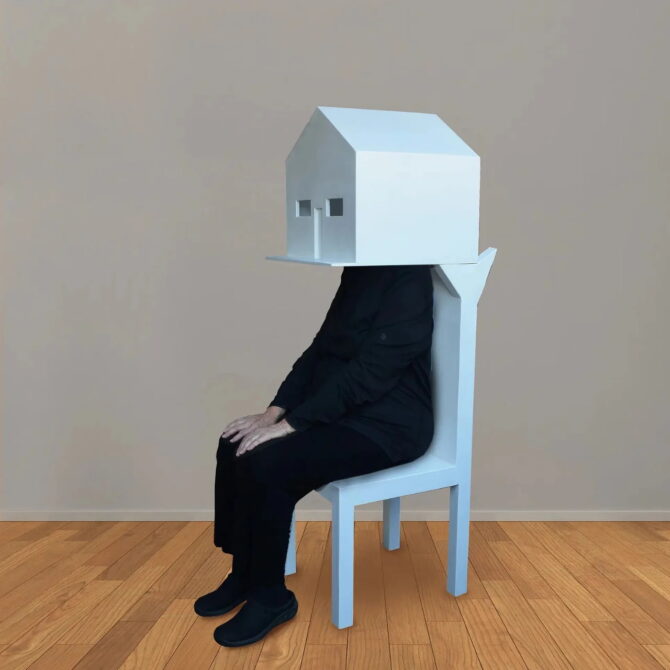
Michael Jantzen, renowned for his avant-garde architectural sculptures, has consistently pushed the boundaries of design by merging art, architecture, and technology. His work often explores the reinvention of the built environment, aiming to create spaces that are both functional and thought-provoking. The House Sitter Chair is a testament to this philosophy, challenging conventional notions of furniture and personal space.
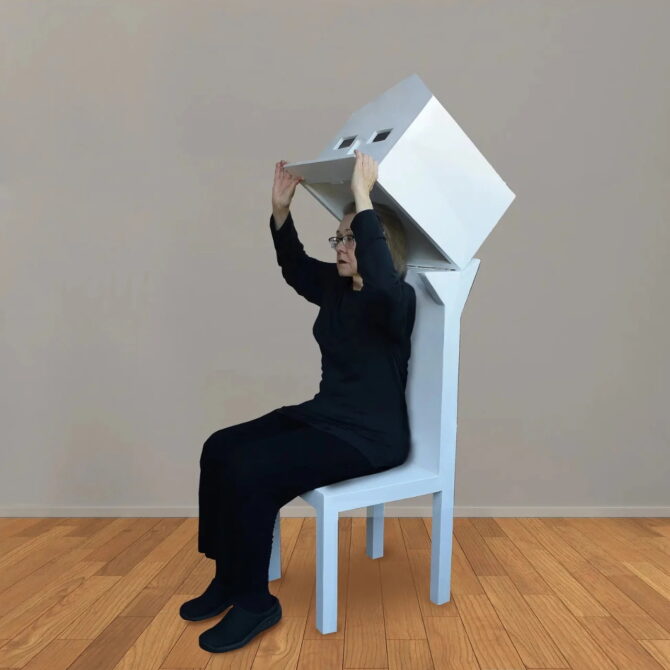
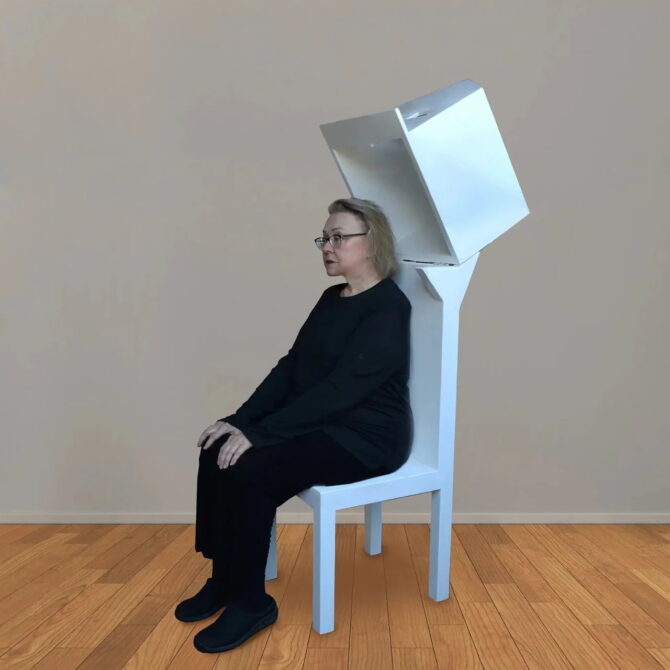
The House Sitter Chair is constructed from a network of interconnected geometric shapes, primarily straight lines and angles, creating a structure that feels both open and enclosed. The materials, likely a combination of wood and metal, are painted to emphasize the chair’s sculptural qualities. Light and shadow interact across its surfaces, adding depth and dynamism to its appearance. While the House Sitter Chair serves a practical purpose, its true significance lies in its conceptual underpinnings. Jantzen’s design encourages users to contemplate the nature of personal space and the boundaries between public and private spheres. The act of placing one’s head inside the tiny house becomes a form of performance art, blurring the lines between observer and participant.
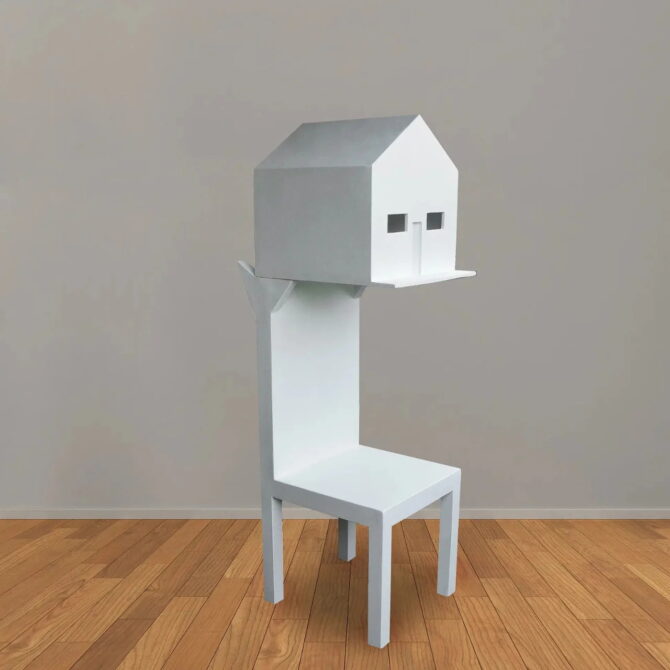
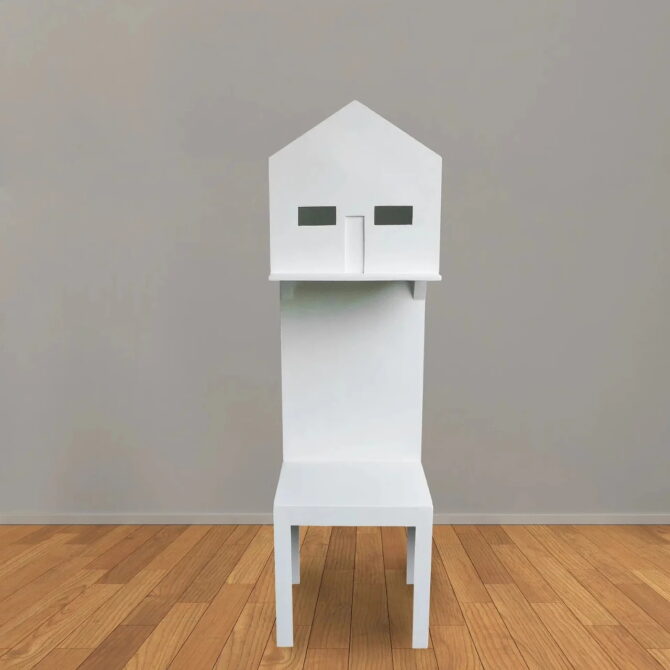
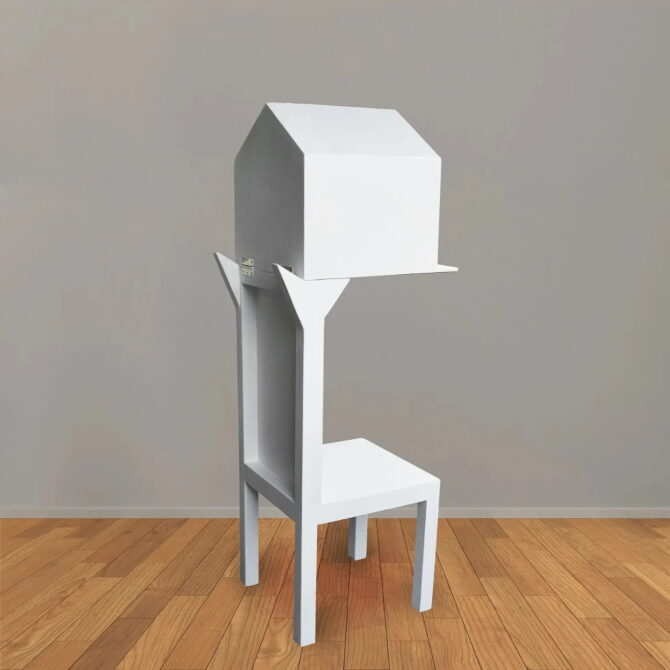
This piece is part of Jantzen’s broader exploration of architectural forms and their symbolic meanings. In his series “Interrogating the Meaning of Houses, Churches, and Chairs,” Jantzen deconstructs familiar structures to challenge our perceptions and invite introspection. The House Sitter Chair fits seamlessly into this narrative, serving as both a functional object and a catalyst for reflection.
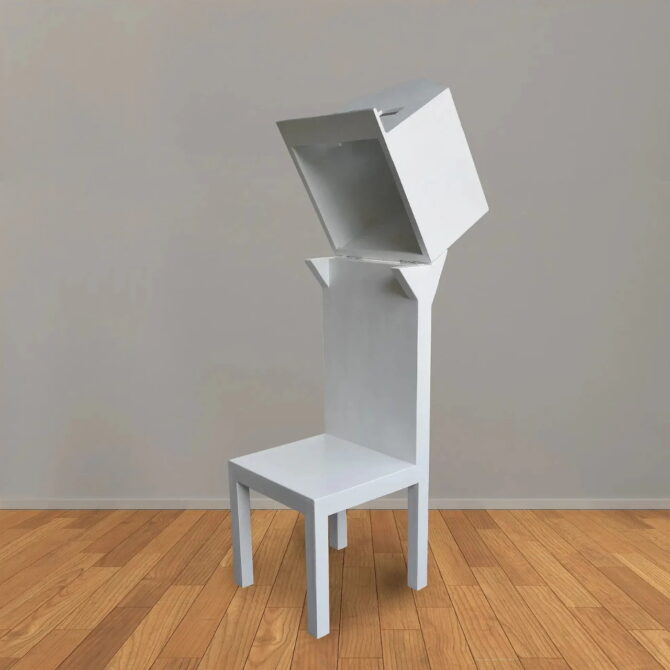
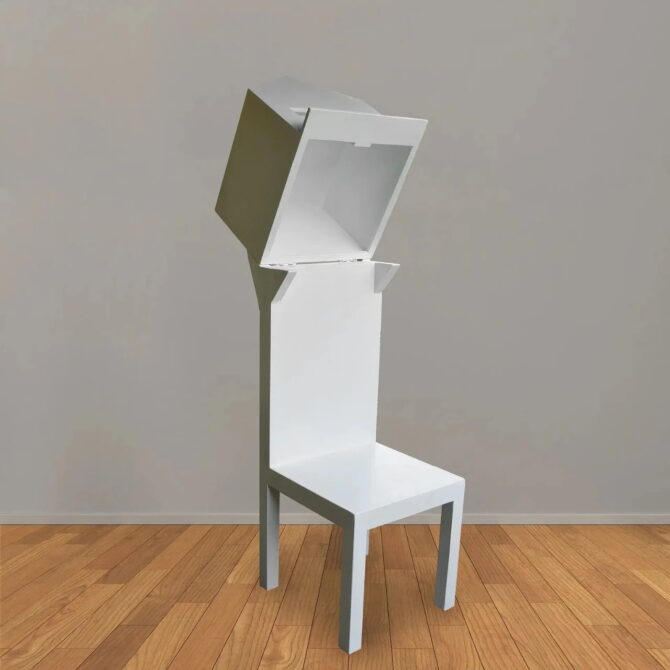
Michael Jantzen’s House Sitter Chair exemplifies the fusion of art and functionality, offering users a unique space for solitude and contemplation. By reimagining the traditional chair as a sculptural sanctuary, Jantzen invites us to reconsider our relationship with personal space and the environments we inhabit. In doing so, he not only provides a haven for the individual but also sparks broader conversations about the role of design in our daily lives.
How do you envision the integration of art and functionality in everyday objects enhancing our personal spaces and experiences?